Why AI-sensitive roles are actually increasing in rates, and what this means for independent professionals.
Striive now powered by
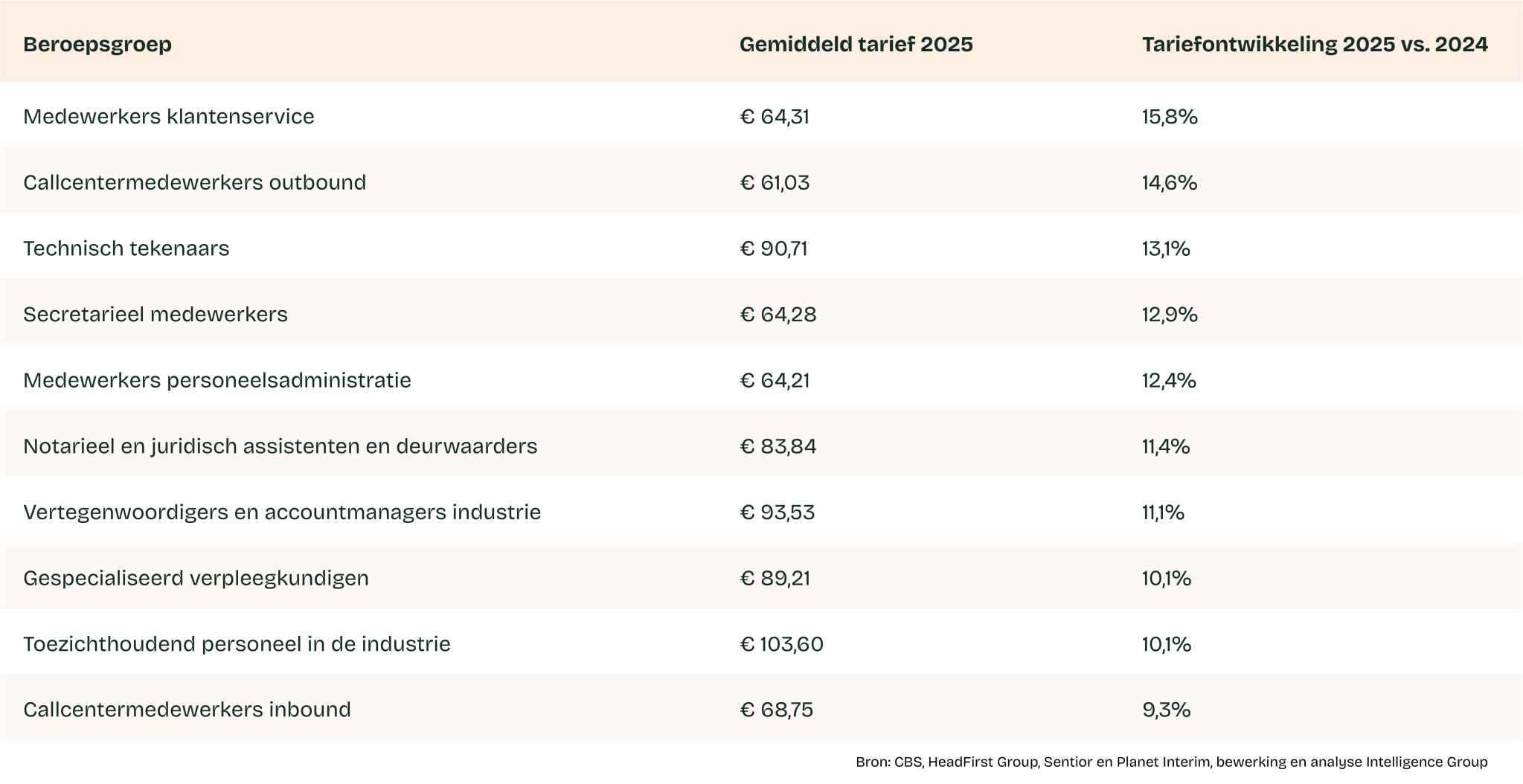
The labor market is changing at a rapid pace. While many experts predicted for years that artificial intelligence would mainly put downward pressure on rates for administrative, support, and repetitive roles, the latest Talent Monitor reveals something striking: the largest rate increases are occurring in the most AI-sensitive professions.
Roles such as customer service representative, HR administration, secretarial support, and inbound call center positions are increasing at rates of up to 15.8% per year. Growth that is significantly higher than in traditional specialist roles.
Rate trends in the fastest-growing professional roles
How is this possible? And more importantly: what does this mean for independent professionals?
1. A market changing faster than organizations can keep up
Many organizations are currently in a transition phase: AI is being implemented, processes are being redesigned, and teams are being restructured.
It is precisely during this phase that temporary demand for experienced interim support increases:
-
Junior roles are often the first to be phased out during reorganizations.
-
Senior support professionals are retained, as they are better equipped to work with hybrid processes (human + AI).
-
Temporary gaps need to be filled—often by external professionals.
The result: rates increase, even though the long-term expectation is that AI will make these roles more efficient.
2. AI makes versatility and seniority more valuable
Many support roles can indeed be partially automated. However, the same research shows that it is primarily junior and highly repetitive work that comes under pressure. Not the more complex or hybrid tasks.
Senior support professionals stand out through:
-
contextual understanding
-
customer sensitivity
-
deep process knowledge
-
accountability
-
the ability to quickly adapt to new systems
These qualities are not easily automated. As a result, experienced professionals in these roles are becoming relatively scarcer and more valuable.
3. Fewer available assignments → more competition → higher rates?
It may sound counterintuitive, but this is exactly the pattern shown by the Talent Monitor.
Development of the number of bids per assignment (index: Q1 2020 = 100)
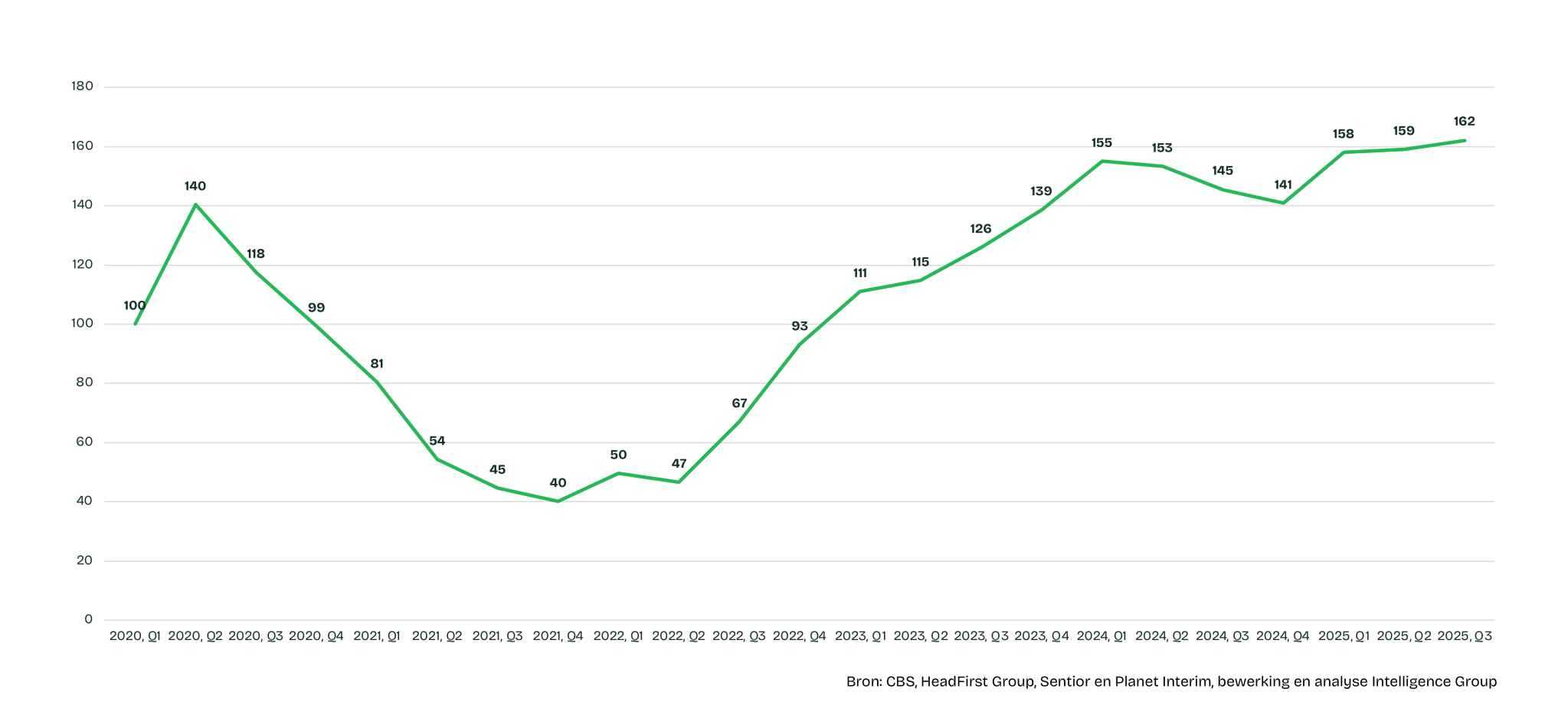
There are more applications per assignment than ever before. Four times as many as during the COVID labor shortage. At the same time, the number of applications that receive no response at all is rising sharply.
This means:
-
The market is shifting into a buyer’s market.
-
Organizations can choose from large pools of freelancers.
-
Yet rates in specific roles are increasing rapidly.
Why?
Because in turbulent times, organizations are unwilling to take risks with inexperienced professionals. They prioritize certainty, which drives up rates for experienced talent.
4. The paradox explained: AI replaces tasks, not professionals
AI is changing the nature of work, not the value of experience.
This is especially true in support roles:
-
AI takes over part of the tasks.
-
What remains is more complex, sensitive, and demanding.
-
The professionals capable of handling this work are relatively scarce.
This leads to a paradoxical situation:
Roles considered “at risk” from AI are increasing in value the fastest, at least for now.
And that is exactly what the data shows.
5. What does this mean for self-employed professionals?
Position yourself as senior, even if you are technically mid-level
Emphasize experience, process knowledge, and independence. These are the qualities currently commanding a premium.
Specialize in hybrid ways of working (human + AI)
Not “AI is replacing my role,” but: “I know how to use AI to make my role more effective.”
Shift your profile toward more complex tasks
Even within support roles, there are high-value niches. Examples include compliance support, HR analytics, and AI-driven customer service workflows.
Be confident in raising your rates
Market data shows that seniority and hybrid skills are being rewarded more than ever.
Conclusion
While AI will automate certain tasks in the long run, the short- to medium-term outlook is actually favorable for experienced professionals in support functions. Demand is shifting, not disappearing. In fact, rates are rising faster than in many specialist roles.
For self-employed professionals, this presents a clear opportunity:
position yourself strategically, develop AI skills, and make yourself indispensable in a rapidly evolving market.
Seize your next opportunity!